
Rediance RD

FibroScan

FibroScan

A FibroScan is a non-invasive diagnostic device that uses Transient Elastography (TE) technology to measure liver stiffness and assess liver fibrosis and fatty liver disease. It provides a quick, painless, and reliable alternative to liver biopsy for evaluating liver health.

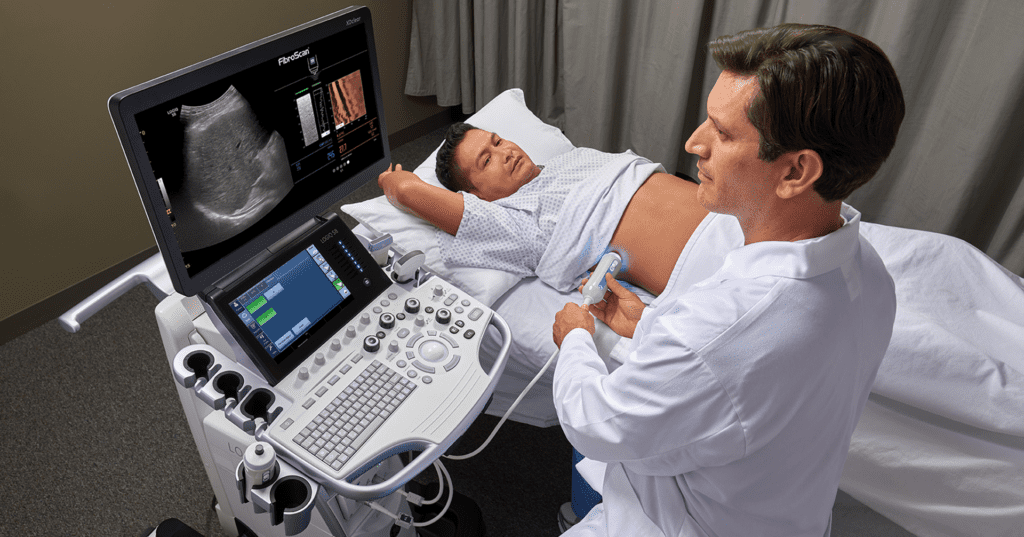
Key Specifications (Typical)

  • Technology: Transient Elastography (TE)
  • Measurement Parameter: Liver Stiffness and Controlled Attenuation Parameter (CAP)
  • Examination Time: Typically 5–10 minutes
  • Procedure Type: Non-invasive and painless
  • Results: Immediate quantitative assessment
  • Liver Stiffness Range: Expressed in kilopascals (kPa)
  • Fat Quantification: CAP score for hepatic steatosis assessment
  • Patient Position: Supine (lying down)
  • Data Storage: Digital patient records and reporting
  • Applications: Liver fibrosis and fatty liver evaluation

Common Clinical Uses

  • Assessment of liver fibrosis
  • Detection and monitoring of fatty liver disease (NAFLD/NASH)
  • Evaluation of chronic hepatitis B and C
  • Monitoring of liver cirrhosis
  • Follow-up of liver disease treatment
  • Pre-treatment and post-treatment liver assessment

Advantages Over Liver Biopsy

  • Completely non-invasive
  • Painless and rapid procedure
  • Immediate results
  • No hospitalization required
  • Repeatable for regular monitoring
  • Reduced risk of complications
  • High patient comfort and acceptance

Examples of FibroScan Systems

  • FibroScan® Compact
  • FibroScan® 430 Mini+
  • FibroScan® Expert Series

Typical Benefits

  • Early detection of liver fibrosis
  • Accurate monitoring of chronic liver diseases
  • Reliable assessment of fatty liver conditions
  • Improved patient compliance
  • Fast clinical decision-making
  • Cost-effective alternative to invasive diagnostic procedures