
TMT (Treadmill Test)
TMT (Treadmill Test)
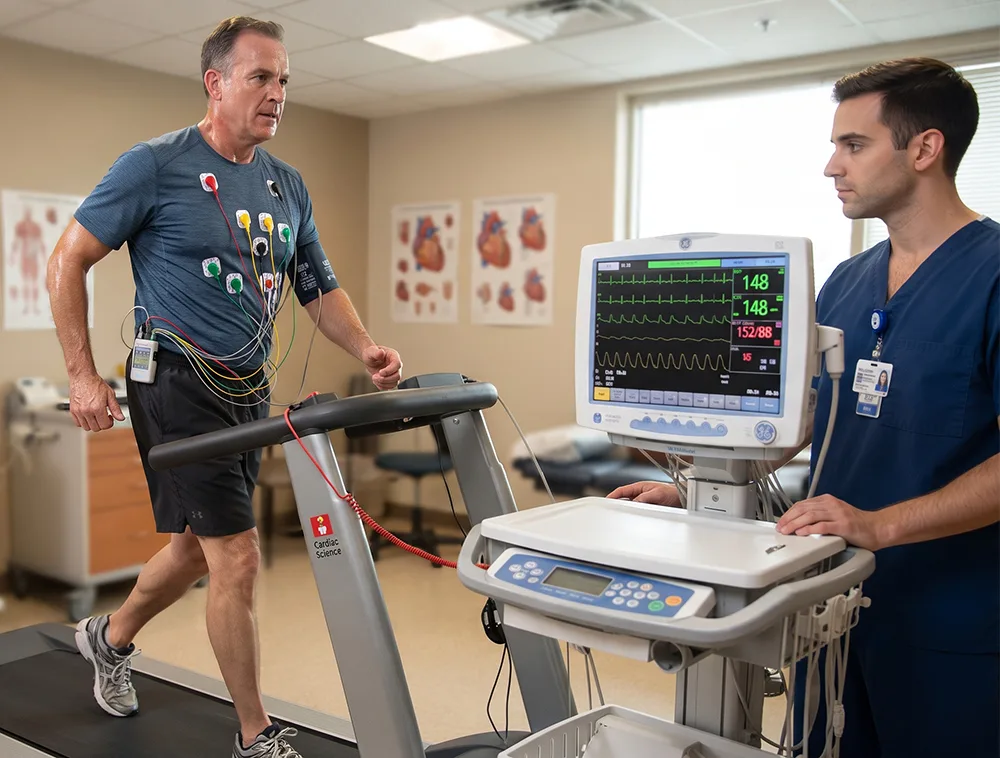
TMT (Treadmill Test), also known as an Exercise Stress Test, is a non-invasive cardiac diagnostic procedure used to evaluate the heart’s response to physical exertion. During the test, the patient walks on a treadmill while continuous ECG, heart rate, and blood pressure monitoring are performed to assess cardiovascular fitness and detect underlying heart conditions.
Key Specifications (Typical)
- Technology: Exercise Stress Testing System
- Test Type: Non-invasive Cardiac Stress Assessment
- Exercise Equipment: Motorized Medical Treadmill
- Monitoring System: Continuous 12-Lead ECG Monitoring
- Display Type: Real-time ECG and Vital Sign Display
- Parameters Measured: Heart Rate, ECG Changes, Blood Pressure, Exercise Capacity
- Stress Protocols: Bruce, Modified Bruce, Naughton, and Custom Protocols
- Data Storage: Digital Test Recording and Reporting
- Connectivity: USB, LAN, DICOM, and Hospital Network Integration
- Applications: Detection of Coronary Artery Disease and Cardiac Fitness Assessment
Common Clinical Uses
- Detection of coronary artery disease (CAD)
- Evaluation of chest pain
- Assessment of exercise-induced arrhythmias
- Investigation of shortness of breath
- Evaluation of cardiac fitness and exercise tolerance
- Post-cardiac treatment follow-up
- Pre-operative cardiac assessment
- Cardiovascular risk stratification
- Monitoring effectiveness of cardiac therapies
Advantages Over Resting ECG
- Detects exercise-induced cardiac abnormalities
- Provides assessment of cardiovascular fitness
- Non-invasive and radiation-free
- Real-time monitoring during physical stress
- Helps identify hidden coronary artery disease
- Supports treatment planning and risk assessment
- Widely available and cost-effective
Examples of TMT Systems
- GE CASE Exercise Testing System
- Schiller CARDIOVIT AT Series
- Philips StressVue System
- BPL Cardiart TMT Systems
- RMS VEGA TMT System
Typical Benefits
- Early detection of heart disease
- Accurate assessment of exercise capacity
- Improved cardiovascular risk evaluation
- Enhanced diagnosis of exercise-related symptoms
- Safe and reliable cardiac assessment
- Supports preventive cardiology programs
- Valuable tool for comprehensive heart health evaluation